
Chapter 217: Odes to Joy
I cannot help myself; one more chapter before the break. How can I not when an opportunity presents itself to take a welcome break from writing from sadness, rage, confusion, outrage and all the other dark forces and instead to write from joy.
How rare that is, and how welcome. And how fitting too given my determination in this newsletter to find joy in the often maddening work we do.
This impulse came to me shortly after 11PM last night when the New York Knicks, my Knicks, the basketball team that for over 60 years I have followed, cheered, prayed for, despairing over, celebrated and, yes, sometimes denigrated, won the NBA championship for the first time in 53 years.
Together with my wife, who has been a die-hard Knicks fan since last Wednesday – she is a quick study, and now, in her second full game was fairly screaming at every unjust foul and missed shot – I had sweated the fourth quarter, another how-in-the-name-of-all-that-is sacred-did-they-do-that Knick comeback against the young and talented San Antonio Spurs.
I stayed up late to watch the postgame – interviews, highlights, trophy presentations, the locker room champagne showers (was that Moet being sprayed? Classy) not ready to let it end.
We were out of town, far from the noisy hoopla and so had to live vicariously through the account of our younger kid from a very loud and happy bar in Northern Manhattan.
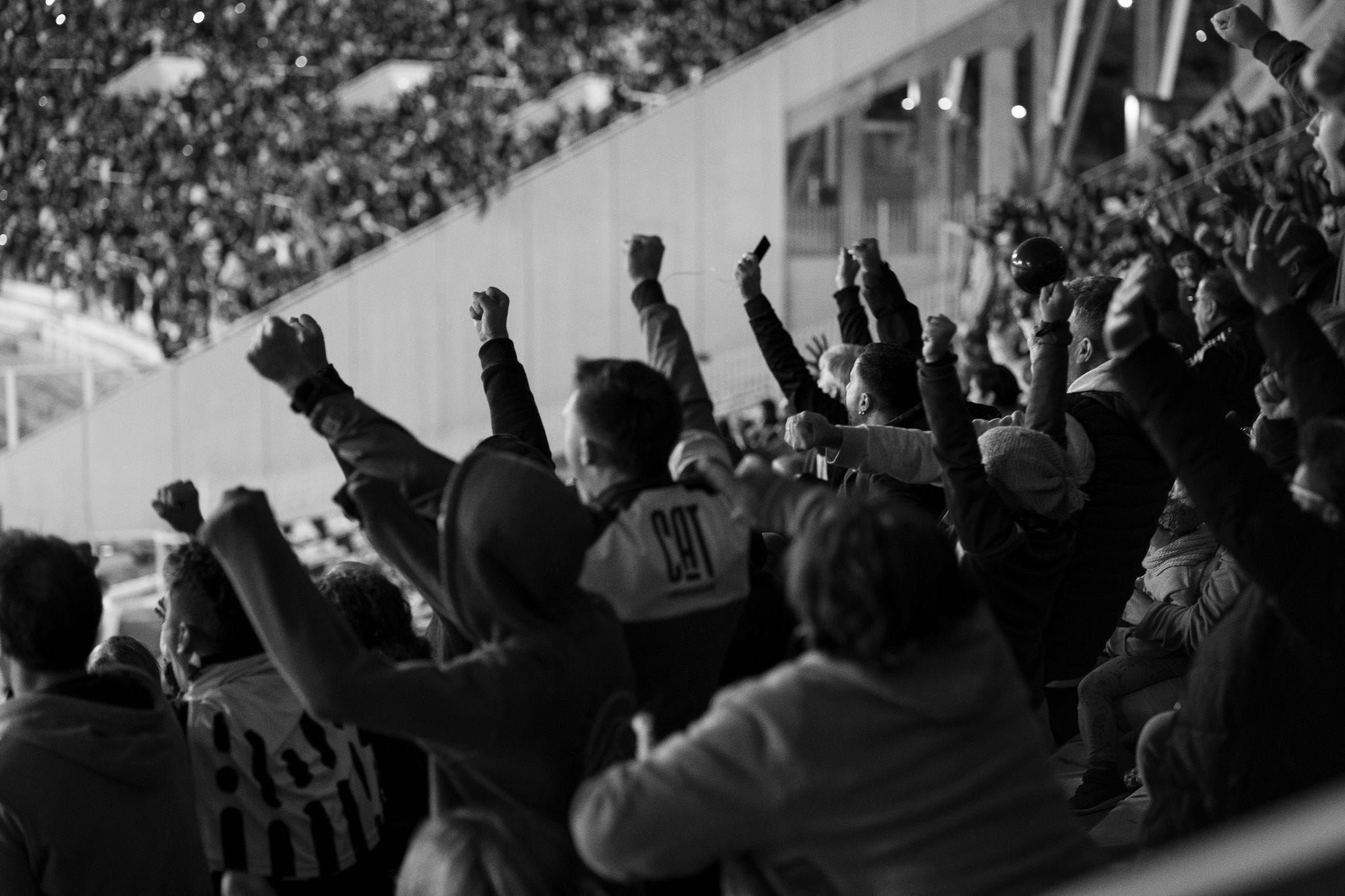
But then came this morning and with the dawn came the dispatches from the arena and better still from the streets of New York: Bedlam. Delirium. And why it all mattered. Which it did.
Here was the terrific Matt Flegenheimer in the New York Times:
“So this is how it feels.
“It is giggling, weeping, spinning, convulsing, mosh-pitting, truck-honking, law-skirting, trumpet-playing, cowbell-ringing, off-key-singing, cigar-lighting, all-night-ing — remembering to remember it all, as if Knicks fans would ever forget.
“It is hugging strangers so hard they go airborne, fist-bumping cabbies as they crawl through concrete delirium, high-fiving kids on shoulders (and adults on shoulders), climbing stoplights and trees and scaffolding to wave the team flag higher, swiping utility cones and wearing them as hats because they are orange.
“It is tears blotting the pavement outside Madison Square Garden, where New Yorkers had for generations walked off disappointment after debacle after heartbreak after OK-that’s-just-cruel.
No sooner had I finished this gem, then David Remnick, the editor of The New Yorker who, in another life, had been a basketball writer, weighed in:
“Joy is here and gone, but we Knicks fans feel it now, we’re embracing it now, from Gun Hill Road, in the Bronx, to Hylan Boulevard, on Staten Island, from Times Square to Grand Army Plaza; from the watch parties in Bryant Park and outside the Garden (buzz off, James Dolan!) and on countless city corners; we’re feeling it in all the filled-to-bursting bars in Elmhurst, Boerum Hill, Astoria, the West Village, and Harlem; on all the buzzing chat groups (“Did you see THAT!” “The refs are murdering us!” “WTF!” “Yes! We did it!”); in suburban living rooms, in hospital waiting rooms, in the backs of cabs, in all the far-flung corners where the Knicks are beloved—joy everywhere. At the wedding I’m attending upstate, a clutch of guests suddenly burst out cheering. Inappropriately. (They’d been furtively watching the game on their phones when the Knicks took the lead down the stretch. Sorry, Coop and Olivia!) From all over the city came reports of stranger-on-stranger hugging; of people crying ecstatically; of subway delays and honking, honking, honking everywhere. “Thank you, Jesus!” said Spike Lee down in San Antonio. “Thank you, Jalen!” said New Yorkers everywhere. Joy! Fleeting, perhaps, but the Knicks are champions without doubt, and it’s been an intense pleasure to watch a team of such flash and fortitude, bravado and humility, prevail after more than half a century of waiting. It is a precious thing.”
I could not get enough of it. And, in turn, got me thinking: surely others, and not necessarily New Yorkers, have experienced such moments – on the field, in the arena, on the streets after the game was won.
What had they written? What had joy compelled them to say?
Plenty. And in the spirit of such moments and the prose it inspires, here are some examples, to remind us all how wonderful writing can be when it comes from a full and happy heart.
John Updike on Ted Williams hitting a home run in his final at bat.
“It was in the books while it was still in the sky. Brubaker, the first-base coach, was waving his arms, and Williams, rounding first, turned to look. He did not tip his hat. Though we were ignorant of what record this was, we knew it was a record of some kind, and the crowd rose, with that noise of a man arising from a chair — a great slow rustle — and we all felt that we had witnessed something final, and something beginning.”
“Gods do not answer letters.”
Nick Hornby on Arsenal winning the league championship on the last kick in the final game.
“I have seen thousands of goals, some of them wonderful, and I have felt what the man next to me felt, and the man next to him, and right around the ground, and beyond the ground to people at home listening on the radio or watching on television: the same gasp, the same groan, the same cheer. And in those moments I was connected to something huge.”
Red Smith on Bobby Thomson’s 1951 pennant-winning “shot heard around the world” home run.
“Now it is done. Now the story ends. And there is no way to tell it. The art of fiction is dead. Reality has strangled invention. Only the utterly impossible, the inexpressibly fantastic, can ever be plausible again.”
C.L.R. James, in “Beyond a Boundary,” on cricket and colonialism.
“The British tradition soaked into me was that when you entered the sporting arena you left behind you the sordid compromises of everyday existence. Yet for us to do that we had to do two things at once: play the game as the British did, and at the same time fight against them.”
Bob Considine on the 1938 heavyweight championship fight between Joe Louis and Max Schmeling.
“Listen to this, buddy, for it comes from a guy whose palms are still wet, whose throat is still dry, and whose jaw is still agape from the utter shock of watching Joe Louis knock out Max Schmeling in one round of their scheduled 15-round world heavyweight championship fight.”
And then, Maya Angelou, on listening to the same fight on the radio.
“Champion of the world. A Black boy. Some Black mother’s son. He was the strongest man in the world. People drank Coca-Cola like ambrosia and ate candy bars like Christmas.”
With that my wishes for a good and happy summer. I will be at Thursday’s parade, with a few million of my new closest friends.
* * *
Nothing good ever came from writers punishing themselves. We know writing is hard. We’re here to show that it doesn’t have to be torture
Mazel Tov!